At the end of May, in a burst of WWWebish enthusiasm, I signed up with a site called DeviantART
...and for some reason, my mind keeps seeing that as Deviant Tart....
My user name is gramaire (gramarye being already taken)
anyways...it's a hard site to negotiate, but I finally found that the sort of things I make are listed under Artisan Crafts - I was a bit disappointed with the content, the Custom Dolls section is full of re-worked action figures and those strange little things called plushies or softies, but there were just enough very original pieces mixed in with them to keep me interested.
So I created a gallery page, put up a doll photo and 3 of my 'earth spirit' wall hangings, then, the web having so many other distractions, I promptly forgot about the whole thing.
When I signed in today, I found that my "water spirits" had been given a Daily Deviation award on the 2 June, and there were 200 comments waiting for me,
to say I was gobsmacked is putting it mildly,
This deviant old tart's ego could hardly get through the door this afternoon.

The chronicles of Erica, a textile and mixed media artist living in Sydney, Australia, as she meanders her way through a life filled with fabric, clay, paper, glass and dolls ..... and dragons
Monday, 11 June 2007


Wednesday, 6 June 2007
Antique threads from an Aussie icon
Sandy on flickr (sierrasndy)
wrote and told me about a lovely Victorian needlecase she had seen on ebay:


Sandy was wondering what the heavy silky thread was that had been used.
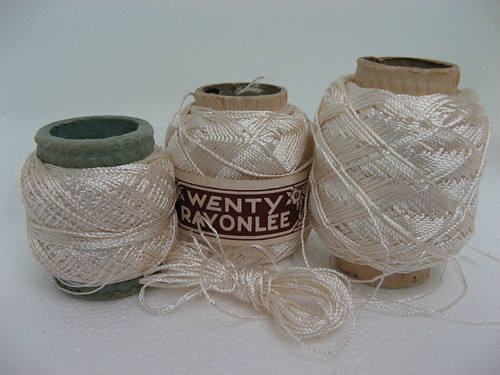
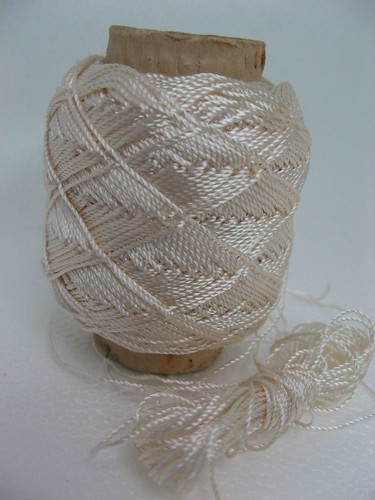
I thought I had some similar that I'd inherited from my mother but when I finally dug it out, I can see it is not the same. Mine is a rayon and has more of a twist to it. I'm not familiar enough with antique needlework to know what would have been used on the needlecase, rayon was being produced in the 1800's but I'm thinking maybe this one was a thick silk.
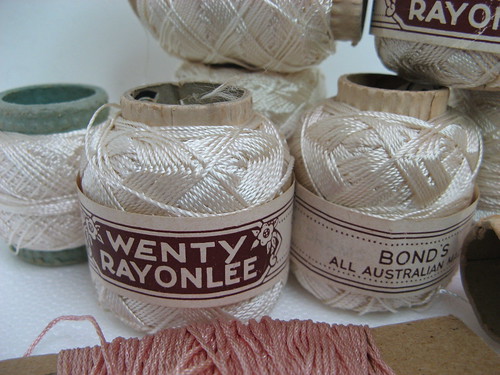
These threads of mine are from the Bonds mills, and are labelled as "crochet and knitting threads"
I would assume that as they are called "Wenty Rayonlee" they would have come from the Bonds factory at Wentworthville in Sydney.
Bonds was established in 1915 by an American, George Alan Bond, who started importing women's hosiery and gloves. In 1917 he began manufacturing hosiery in Redfern, Sydney. In 1918 he moved to Camperdown and began also making underwear. In 1932, Bond built Australia’s first cotton spinning mill at Wentworthville in western Sydney.
The company went into liquidation in 1929 and a public company, Bonds Industries Limited was established. In 1970 the company merged with Coats Paton Pty Ltd. (Coats were thread manufacturers) In 1987 the company was taken over by Pacific Dunlop. In 2001 the company was sold to form a separate entity, ‘Pacific Brands Holdings Pty Ltd’. At that time also the spinning mill was closed.
In 1938 Bond's asked their advertising agency to develop a campaign to sell men's athlectic singlets and "Chesty Bond" was created. He became a comic strip which ran in Sydney papers for the next 20 years.
In the mid 1960's the company decided Chesty was no longer suitable to represent the diversity of the company but Chesty refused to go away. Public demand put him firmly into Australian iconic history and he celebrated his 60th birthday in 1998 at the Museum of Modern Art.
wrote and told me about a lovely Victorian needlecase she had seen on ebay:


Sandy was wondering what the heavy silky thread was that had been used.
I thought I had some similar that I'd inherited from my mother but when I finally dug it out, I can see it is not the same. Mine is a rayon and has more of a twist to it. I'm not familiar enough with antique needlework to know what would have been used on the needlecase, rayon was being produced in the 1800's but I'm thinking maybe this one was a thick silk.
These threads of mine are from the Bonds mills, and are labelled as "crochet and knitting threads"
I would assume that as they are called "Wenty Rayonlee" they would have come from the Bonds factory at Wentworthville in Sydney.
Bonds was established in 1915 by an American, George Alan Bond, who started importing women's hosiery and gloves. In 1917 he began manufacturing hosiery in Redfern, Sydney. In 1918 he moved to Camperdown and began also making underwear. In 1932, Bond built Australia’s first cotton spinning mill at Wentworthville in western Sydney.
The company went into liquidation in 1929 and a public company, Bonds Industries Limited was established. In 1970 the company merged with Coats Paton Pty Ltd. (Coats were thread manufacturers) In 1987 the company was taken over by Pacific Dunlop. In 2001 the company was sold to form a separate entity, ‘Pacific Brands Holdings Pty Ltd’. At that time also the spinning mill was closed.
In 1938 Bond's asked their advertising agency to develop a campaign to sell men's athlectic singlets and "Chesty Bond" was created. He became a comic strip which ran in Sydney papers for the next 20 years.
In the mid 1960's the company decided Chesty was no longer suitable to represent the diversity of the company but Chesty refused to go away. Public demand put him firmly into Australian iconic history and he celebrated his 60th birthday in 1998 at the Museum of Modern Art.
Monday, 4 June 2007
Why does fabric art need to be explained
I frequently visit a gallery that specialises in textile art, the works are always accompanied by an explanation from the artist.
More that just an artist statement, they are sometimes lengthy descriptions of how, where, why, what.
Is there a need amongst textile 'viewers' to have it all explained, a need that doesn't seem to exist in 'painterly' circles.
Why does a textile 'viewer' need to know not only the thought processes, but how it was put together, did the artist hand quilt or was it stitched on one of those big professional quilting machines, was the fabric dyed, stencilled or painted by the artist or bought from the local fabric store.
Is it because textile art is still seen as "women's work", we like to compare stitches, wonder if their work is as fine as granma's, wonder "if I dyed my fabric like that...then I could get results like that.."
Why don't you get the same information at an art show, we are seldom told about the inspirations let alone the technical details like the brand of oil paints or the brush sizes, did he use linseed oil, did the artist stretch his own canvas...
- these artists are a secretive bunch, if only they would tell all the way the textile artists do, then we could go home and paint like Rembrandt!
More that just an artist statement, they are sometimes lengthy descriptions of how, where, why, what.
Is there a need amongst textile 'viewers' to have it all explained, a need that doesn't seem to exist in 'painterly' circles.
Why does a textile 'viewer' need to know not only the thought processes, but how it was put together, did the artist hand quilt or was it stitched on one of those big professional quilting machines, was the fabric dyed, stencilled or painted by the artist or bought from the local fabric store.
Is it because textile art is still seen as "women's work", we like to compare stitches, wonder if their work is as fine as granma's, wonder "if I dyed my fabric like that...then I could get results like that.."
Why don't you get the same information at an art show, we are seldom told about the inspirations let alone the technical details like the brand of oil paints or the brush sizes, did he use linseed oil, did the artist stretch his own canvas...
- these artists are a secretive bunch, if only they would tell all the way the textile artists do, then we could go home and paint like Rembrandt!
Friday, 1 June 2007
Art in the wild
Back when I first started making altered books, I thought how cool it would be to make one and leave it in our local library, I wonder what would happen to it (having worked in our local library and knowing how their tiny minds work, I think our chief librarian would probably toss it in the trash) but as a library user how exciting would it be to find one, maybe leave it amongst the art books so at least it might have a chance of being found by an artlover.
But, like most of my grand plans, I never got around to doing it.
The idea triggered again when I went to the high school Art Express exhibition this year, and saw that the work involved creating a piece of artwork and taking it out into the environment to photograph.
I started to think about doing this, the making, the photographing, but then to leave it out there in the wild.
Is that art, or is it another form of littering the natural environment?
So when I came across a link to Paula McCartney I got all excited about the idea again.
Paula is a photographer/book artist. She photographs brightly coloured fake craft store birds in wooded areas.
Quote: "Rather than settling for what nature has to offer, I have taken control and adorned the trees with their longed for, but absent, tenants" - Paula McCartney
But I think the work that attracted me most was her "accumulations" series of pod-like cocoons. There is nothing in the way of explanation on her web site (which brings up another subject for another day - does art need an explanation?) but googling brought up this "Accumulations focuses on the formations of detritus found as evidence of turbulence and motion along creek beds and river streams". She doesn't say what becomes of these 'accumulations' after photographing.
Imagine making a series of cocoons, go for a bush walk and attach them to the trees and leave them....am I just an environmental troublemaker...?
But, like most of my grand plans, I never got around to doing it.
The idea triggered again when I went to the high school Art Express exhibition this year, and saw that the work involved creating a piece of artwork and taking it out into the environment to photograph.
I started to think about doing this, the making, the photographing, but then to leave it out there in the wild.
Is that art, or is it another form of littering the natural environment?
So when I came across a link to Paula McCartney I got all excited about the idea again.
Paula is a photographer/book artist. She photographs brightly coloured fake craft store birds in wooded areas.
Quote: "Rather than settling for what nature has to offer, I have taken control and adorned the trees with their longed for, but absent, tenants" - Paula McCartney
But I think the work that attracted me most was her "accumulations" series of pod-like cocoons. There is nothing in the way of explanation on her web site (which brings up another subject for another day - does art need an explanation?) but googling brought up this "Accumulations focuses on the formations of detritus found as evidence of turbulence and motion along creek beds and river streams". She doesn't say what becomes of these 'accumulations' after photographing.
Imagine making a series of cocoons, go for a bush walk and attach them to the trees and leave them....am I just an environmental troublemaker...?
Subscribe to:
Posts (Atom)
