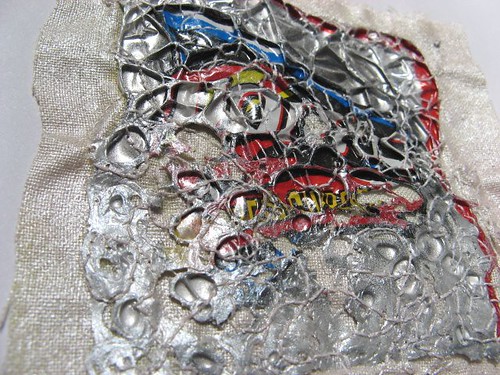
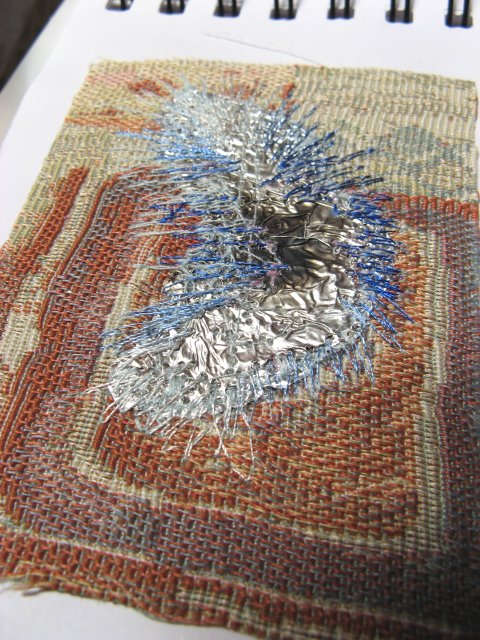
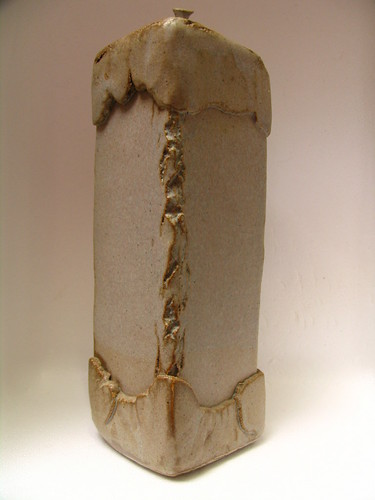
There seems to be a growing movement of "WhatIffers" amongst my textile contacts.
Sara Lechner has started a new blog called
Whatiffing Around and a
Flickr group of the same name.
I was first introduced to the "what happens if" by
Carol Wilkes, an Australian textile artist, can't remember how many years ago now, but it was at the now defunct "Camp Creative" which was a full week of playing at Katoomba, they had workshops in everything from textiles, drumming, art, blacksmithing, sculpture. Friends and I would rent a cottage in the main street and have the most amazing week.
A couple of years ago I started putting my "whats" experiments in a little notebook, (if you don't write it down, it is too easy to forget the secret ingredient), so I thought I might show it here.
It's a bit of a mixed bag but mostly textile related.
I'll start today with tyvek:
There are lots of web sites around with information on tyvek, enter the phrase "using tyvek for art" into google and you'll find loads of information so I won't repeat all of it here, but will say do it in a well ventilated space, there WILL be fumes, and when you paint it before melting you can add paint fumes as well - not a healthy mix.
There are also different weights and grades of tyvek, what you get depends whether you shop with an art supplier, hardware store or post office.
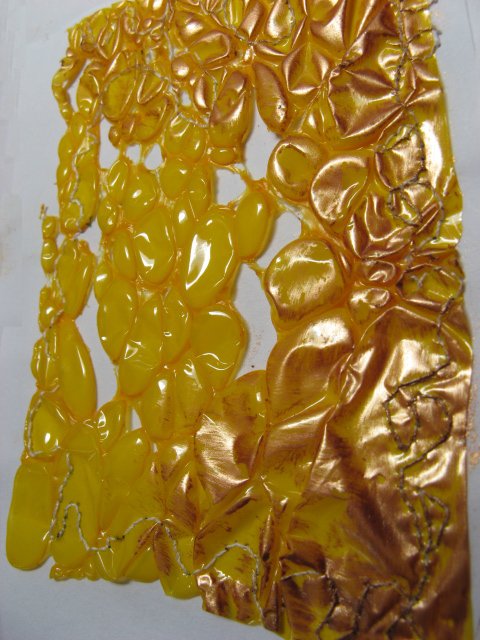
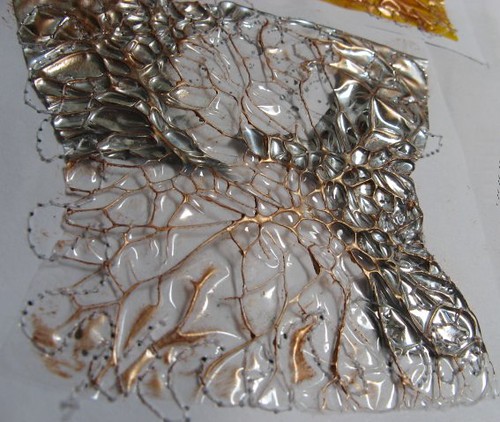
The first two pictures are the thin sheets bought from an art supply:
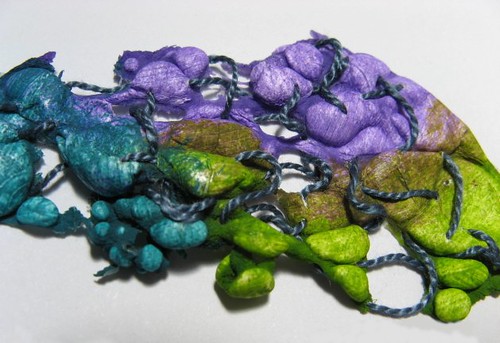
painted and stitched before applying heat with an iron (put it between two sheets of baking paper before ironing)
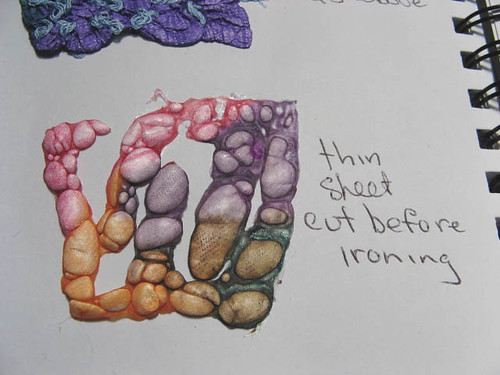
this was a thin sheet painted then cut before ironing
The next is a piece of tyvek from a pair of painters disposable overalls bought in a hardware store - much softer and pliable fabric but didn't appear to melt as much.
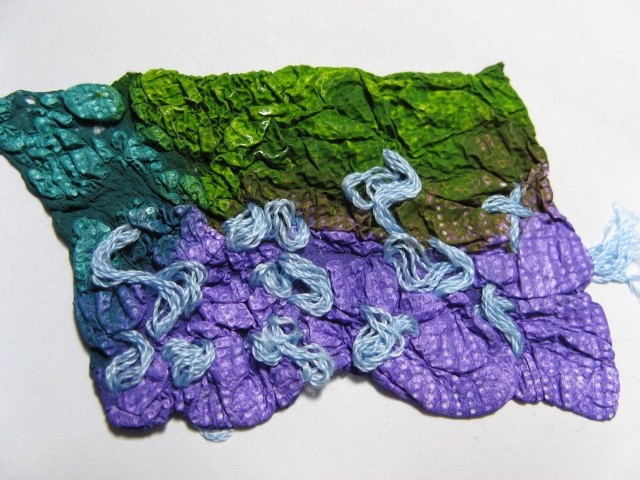
Next is a FedEx bag received in the mail from the US - I haven't checked the Australian Post Office but I'm pretty sure we don't have tyvek bags here.
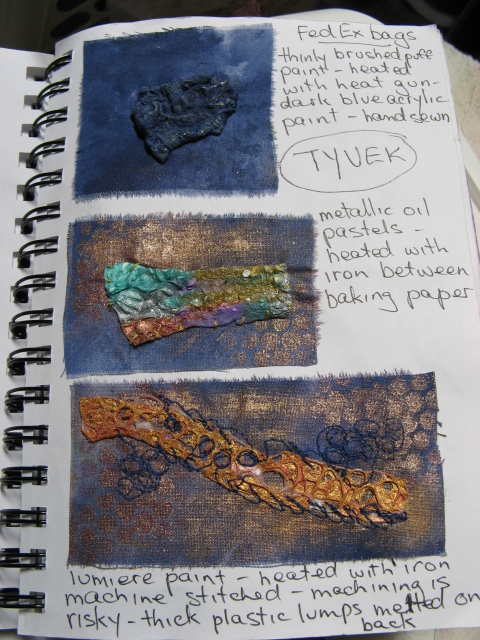
The first piece at the top of this next page was brushed with puff paint, which puffs up on heating - don't ask where to get it! I've had a bottle for about 15 years! (Part of my "Use It and Don't Buy Anything New" programme for this year)
Heated with a heat gun.
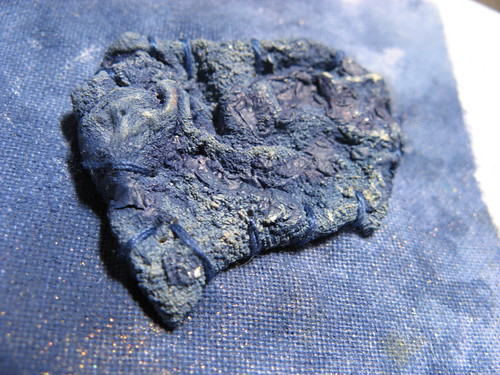
the piece in the centre of page was coloured with metallic oil pastels and ironed.
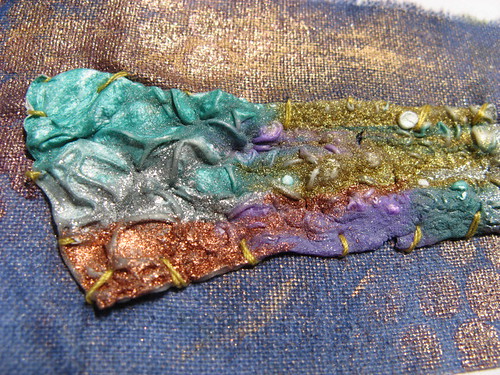
next was painted with Lumiere paint, then melted and sewn in place with free machining - be very careful doing this - you can see the little opaque white bits, they have turned into pure plastic blobs and will break needles. Of all the different grades I tried, the FedEx bag seemed to have the hardest surface when melted.
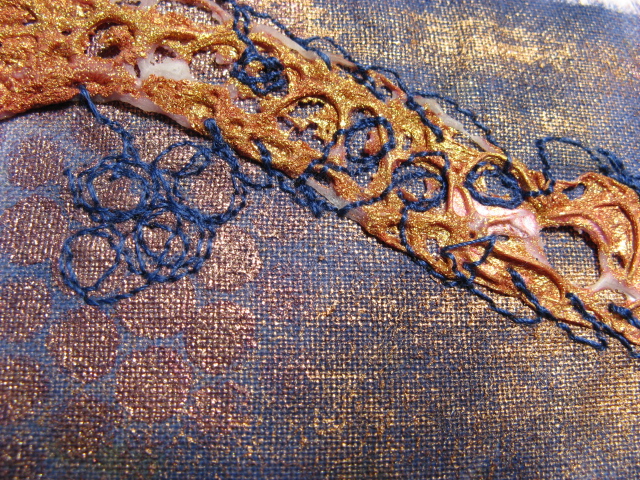
Next is I think my all time favourite piece of tyvek - without any help it seemed to form a goddess shape:
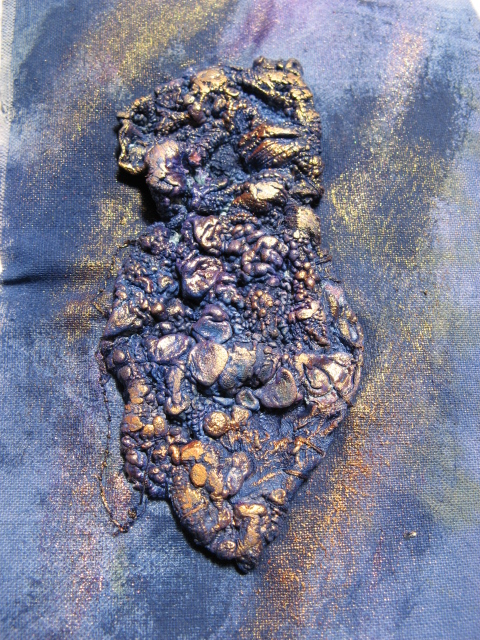
It is thick puff paint on a piece of Fed Ex bag, heated with a heat gun, then dark blue acrylic paint with highlights of gold Lumiere paint, hand sewn after I broke a machine needle on it. Isn't it yummy!
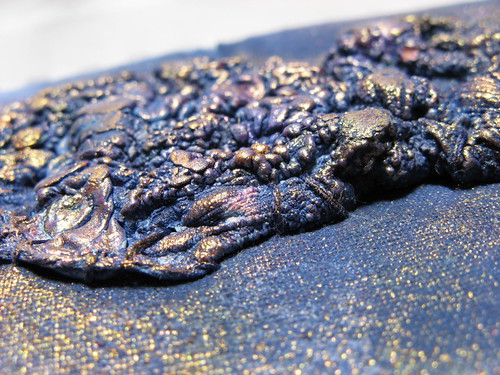
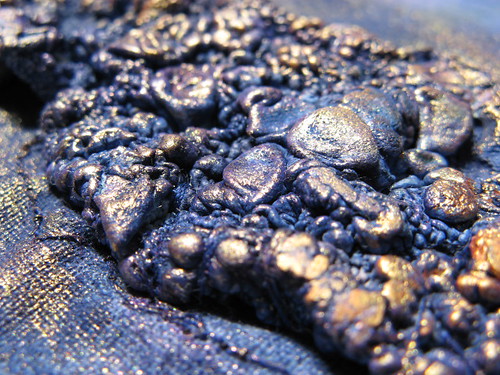
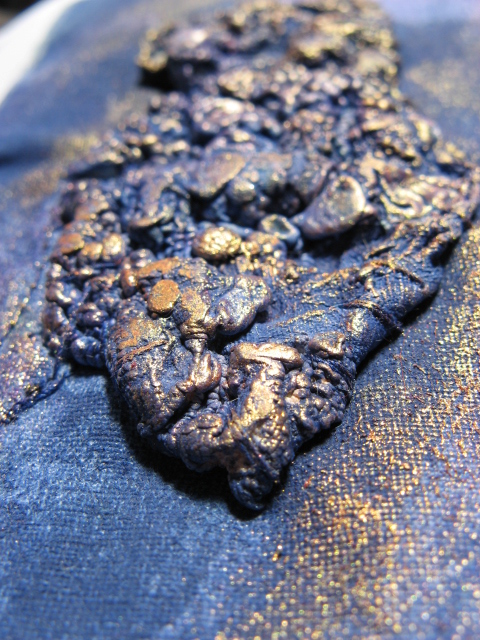
And here's a few more:
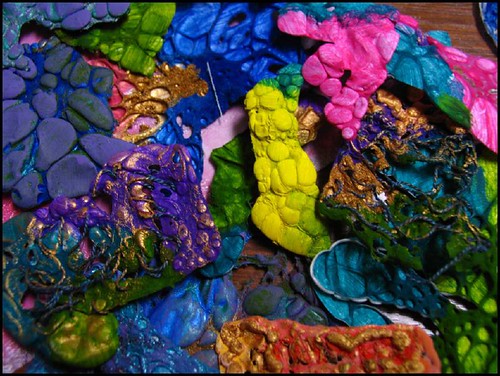
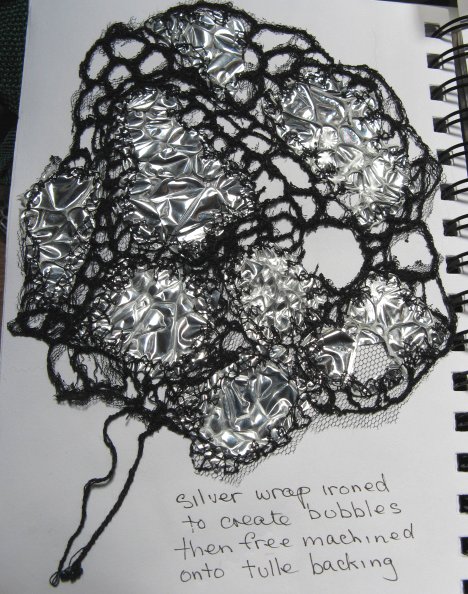
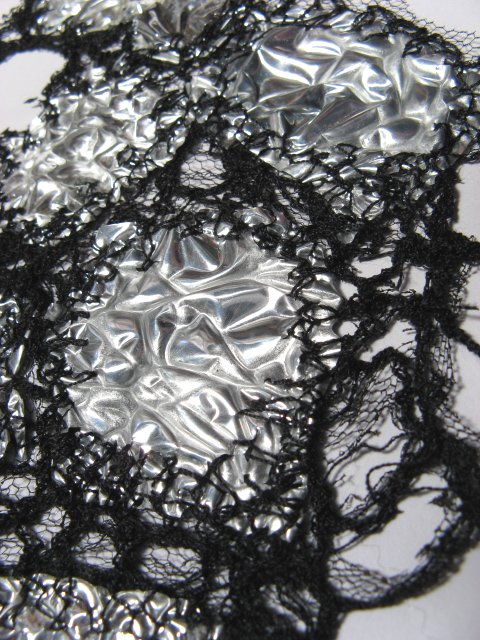
then if you are wondering what to do with all these little pieces, you could work it into your embroidery:
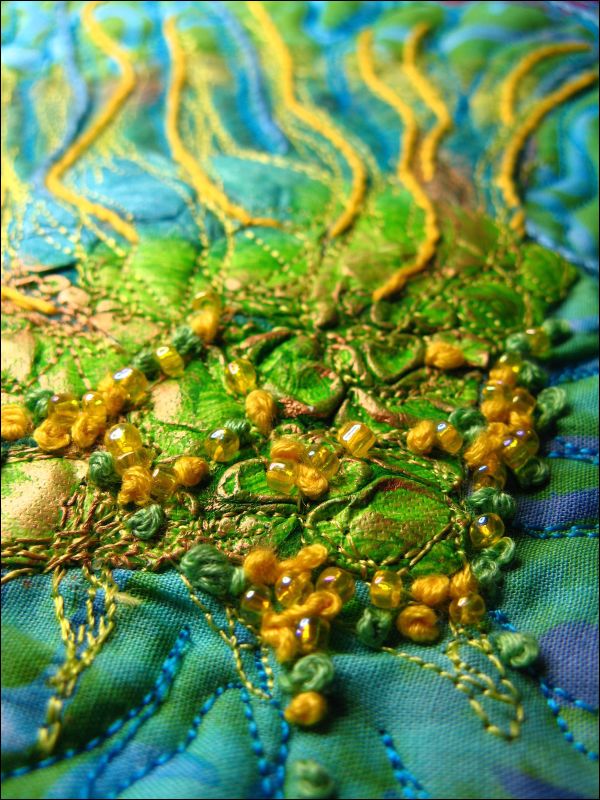
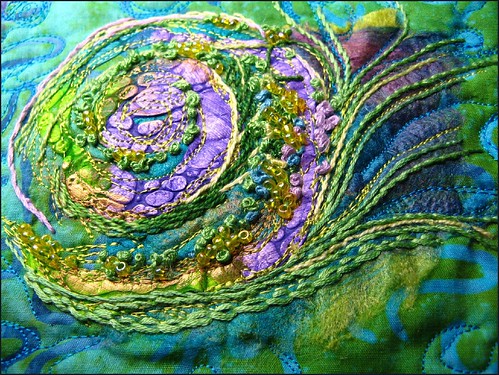
phew!
If you want to see any of these larger, click to go to Flickr, I've made them all small to fit in my new 3 columns template.
I have lots more What Ifs but I think this was the biggest - I might make it a regular What If Wednesday, which should get me working!